|
 ENG-DrHH-intro-2025.pdf NL-DrHH-intro-2025.pdf ENG-DrHH-intro-2025.pdf NL-DrHH-intro-2025.pdfThe exhibition of Dr. Hugo Heyrman A Sense of Transparency, runs from September 20 to November 23, 2025. The opening will take place on Saturday, September 20, from 11:00 am to 9:00 pm. The book of the same name and its bibliophile edition will also be presented. Dr Hugo Heyrman, painter, pioneer in happenings, film experiments, net.art and intermedia. A Sense of Transparency Cinematic sequences
Transparency vs mystery Temporality is the structuring of experience
Time is the element in which we exist |
||||
|
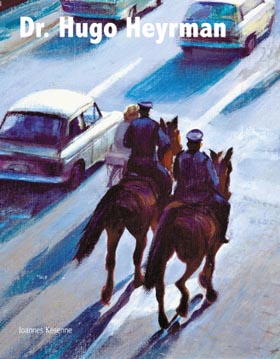
NL-EN-Intro-DrHH-2023.pdf Dr. Hugo Heyrman / — an extensive exhibition, Artist Dr. Hugo Heyrman positions himself at a remarkable level within the art world. When we assess his oeuvre spanning over half a century, its groundbreaking role is more than obvious. In the golden sixties, along with Panamarenko, he introduced happenings, actions, pop art, and conceptual art. The early seventies saw him setting the tone with video art and the first digital experiments in the realm of art. Even in his street-life painting palette from the earliest days, we can identify the cinematic zoom function an entire generation of Flemish painters emulated in the nineties. Joannes Késenne |
|
|||
|
— an extensive exhibition, Voor Heyrman is het enigma van de ‘realiteit’ het zichtbare, niet het onzichtbare. Als schilder maakt hij het onbekende in het bekende zichtbaar, met de intentie onderliggende denk- en gedragspatronen te doorbreken. Gemotiveerd door het idee dat een enkel moment van inzicht een heel leven kan overspoelen met betekenis. |
||||
|
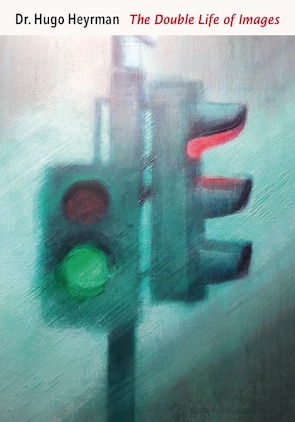
— an extensive exhibition, Als schilder van ’atmosferen van verandering’, creëert hij een picturale ruimte die zich openplooit in een meervoud van betekenis. Zijn betrokkenheid bij de wereld raakt ons, als een picturale realiteit, een plaats buiten ruimte en tijd — in het oog van de 'maelstrom', omgeven door een veranderende 'zeitgeist'. Het boek 'The Double Life of Images' van Dr. Hugo Heyrman, met een essay van de kunstenaar, verschijnt naar aanleiding van de gelijknamige tentoonstelling in de Galerie De Zwarte Panter, Hoogstraat 70-72 Antwerpen. |
||||
|
|||||
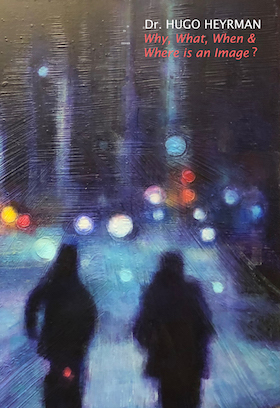
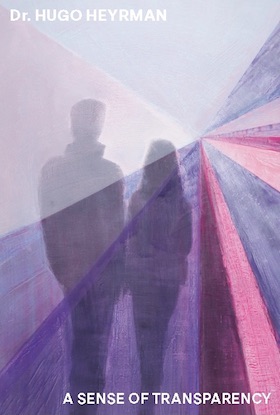 Book cover, Into the Future I, 2025
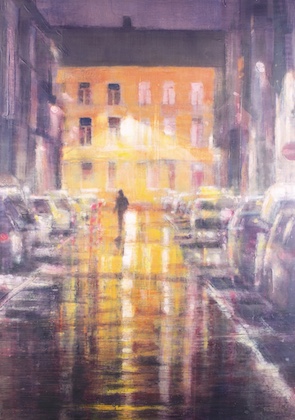
 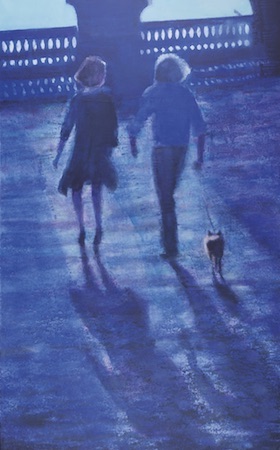 Cinematic Panter City, 2925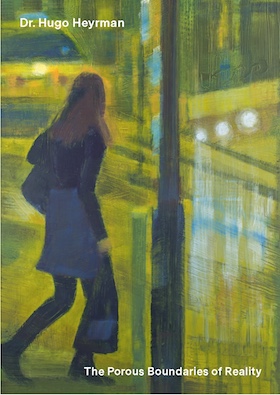
 Transparent Interaction, 2016 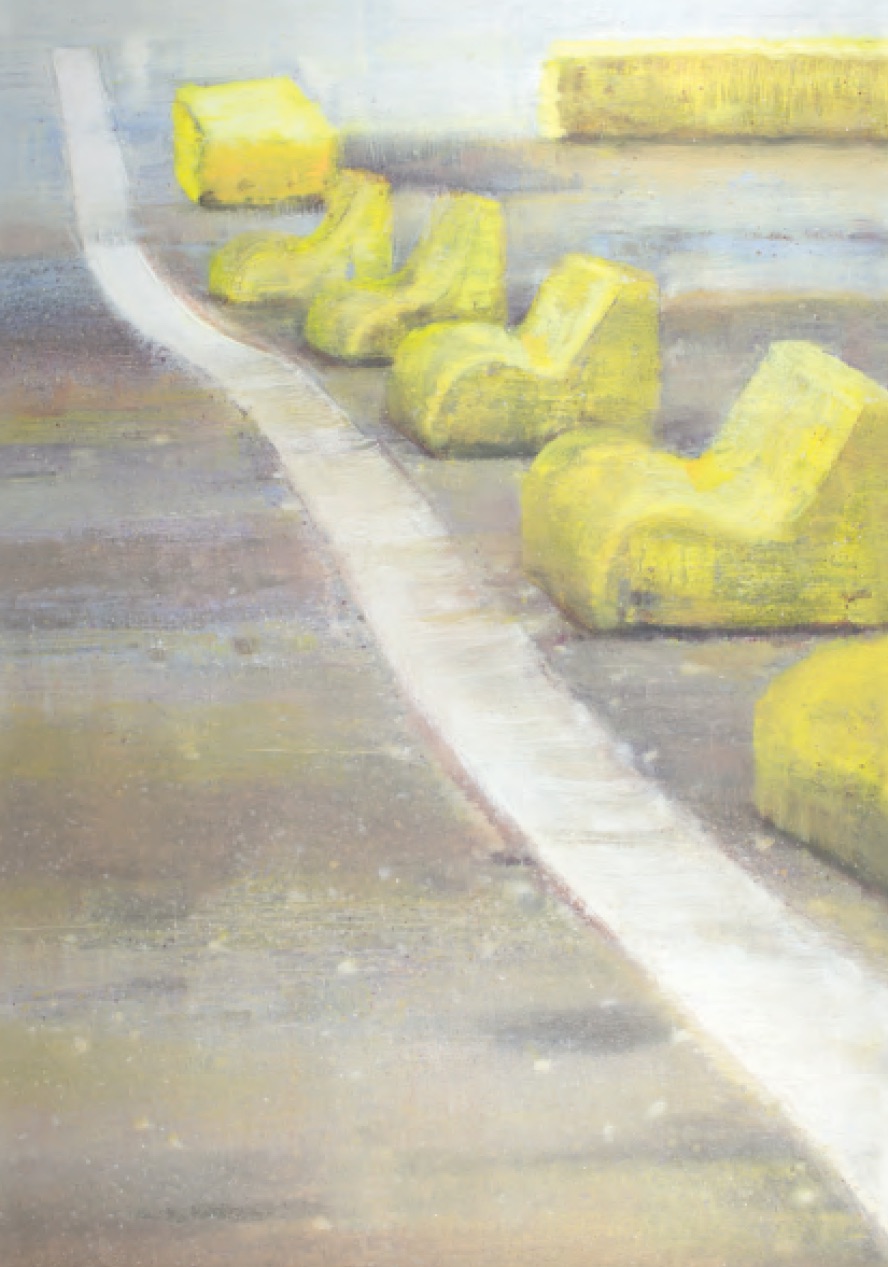 Free Space, 2016 |
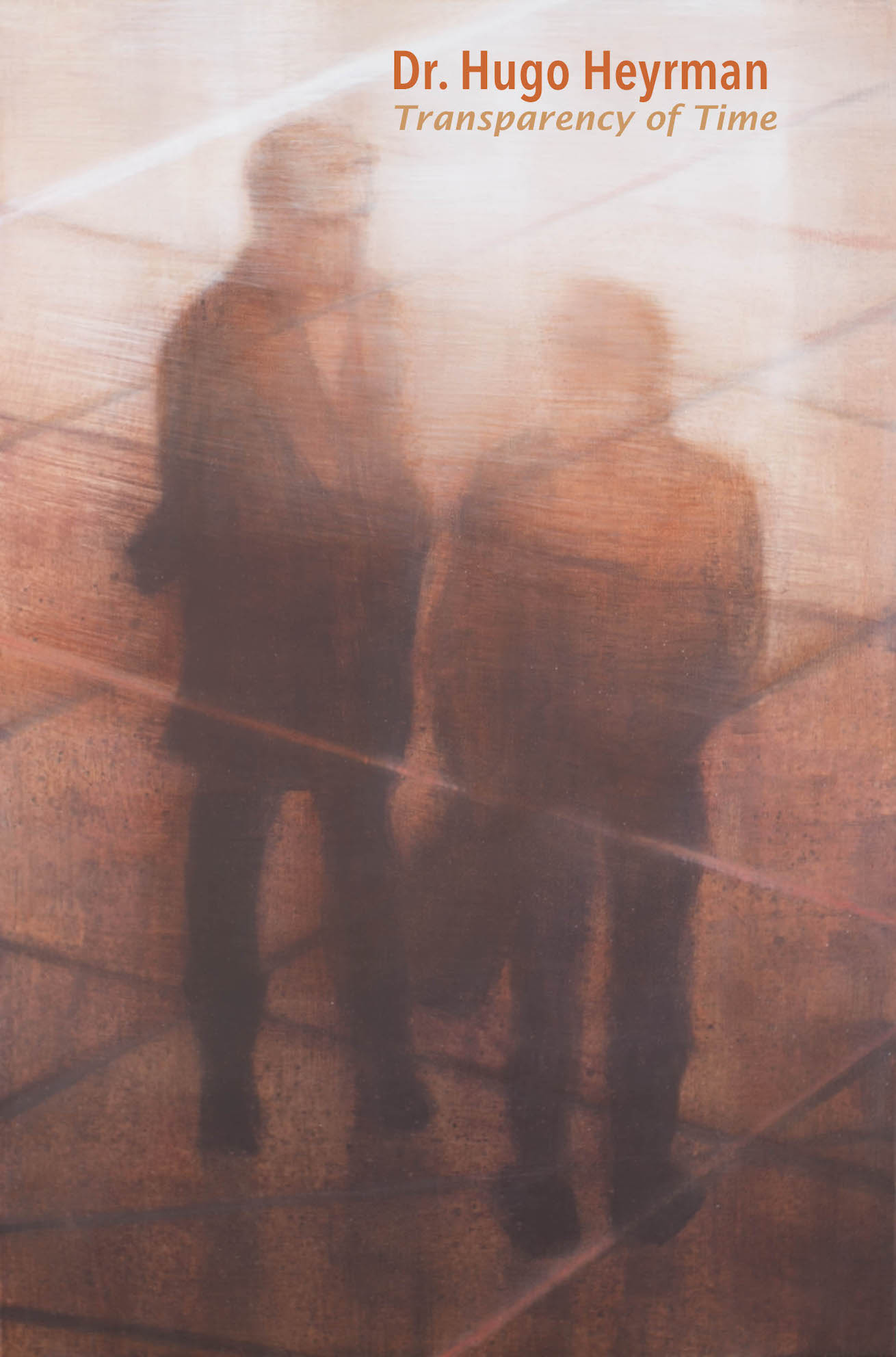
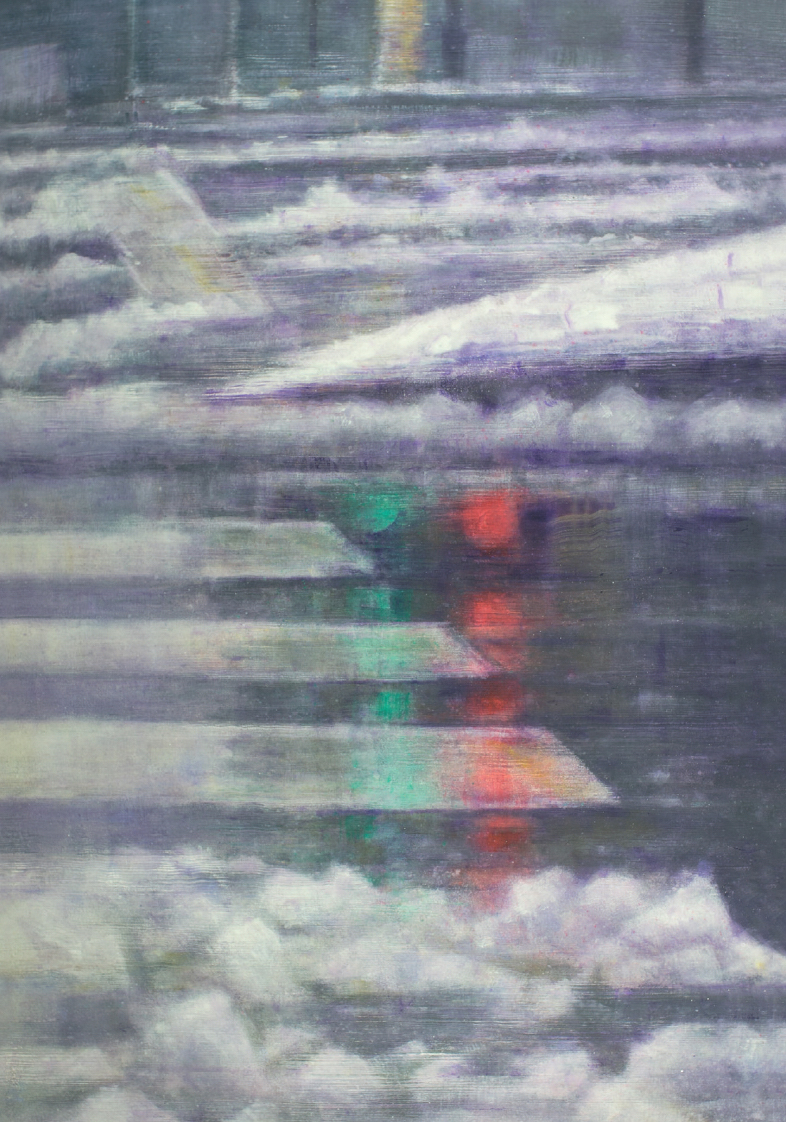
The exhibition 'Transparency of Time' (2017) reveals how Dr. Hugo Heyrman explores the possibilities of painting and the adventure from earlier periods: A Transformative Gaze (2014), Another Reality (2013), Inside the image (2011), City Life & Body Language (2009). This is his 13th solo-expo (since 1975) in the gallery De Zwarte Panter, Antwerp. |
|
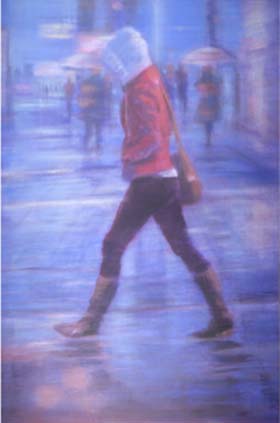
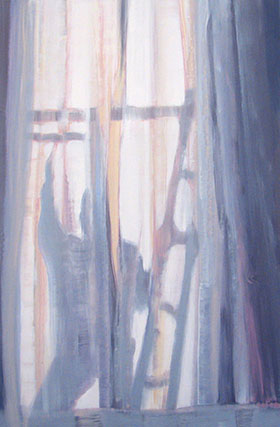
ENG_a_transformative_gaze.pdf NL_a_transformative_gaze.pdf Dr. Hugo Heyrman A Transformative Gaze — an extensive exhibition, from 16 November - 18 January 2015 Gallery De Zwarte Panter, Antwerp The extensive exhibition 'A Transformative Gaze' reveals how Dr. Hugo Heyrman as a painter explores the possibilities of his medium. The paintings and works on paper provide an insight into the recent development of prior periods: Another Reality (2013), Inside the image (2011), City Life & Body Language (2009). This is his 12th solo-expo (since 1975) in the gallery De Zwarte Panter, Antwerp. Turning points Heyrman paints —"because it’s a fascinating experience, how different the world could look on canvas.” The works are reflections on the appearance of the real. From a personal archive, experiences, memories and imagination, cinematic scenarios are coming into existence. They are pictorial transformations about the mystery of the flux of life. Recurring themes are philosophical and psychological turning points, city life, body language, love, loneliness and the human condition. The transformative atmosphere of the work belongs to an imaginary world. His work has a unique look, which opens up the imagination in interaction with the work. The images seems to vibrate and have a liquid look. They speak for themselves. It’s a crystallization of the painting process. They also shows us the beauty of not understanding something. In the artist’s oeuvre the gaze is always moving, between an outer and inner world. On canvas, the transformative gaze of the artist continues further in time. Resonances A relevant characteristic is that Heyrman gives expression to an uninhibited sense. He creates images with a promise of what is still to come. His approach is deliberate and informal, without rhetoric or irony. By building up suggestive layers of paint, he evokes a mental space. The sensual tactility of his brushstrokes, together with the symbolic/emotional meaning of the colour, encourages an involvement with the world, in an atmosphere of resonance. The artist shares the experience of a another reality with us, by making the extraordinary in the ordinary visible, for example; The Cherry Pie (2014), a deep reflection on presence and absence, with a crystalline transparency, or Personal Tempo (2013) and Yellow Visibility II (2014), where a solitary figure moves forward in a cosmological-like environment of colour, light, shadow and elemental forces. These are images in which the gaze can get lost endlessly. Dr. Hugo gives the gaze of wonderment an existence in painting. |
|
Art Brussels 2014 Dr. Hugo Heyrman, new paintings Represented by Galerie De Zwarte Panter |
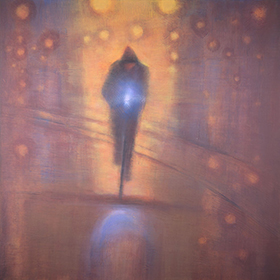
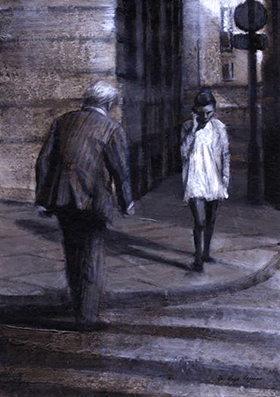 Generations, 2013
 |
Art Brussels 2013 Dr. Hugo Heyrman, new paintings Represented by Galerie De Zwarte Panter |
|||
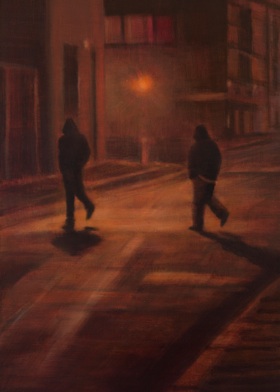 Two Figures, 2011
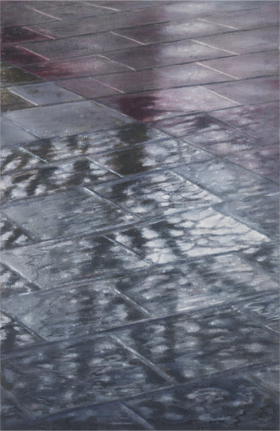 Liquid Tree, 2012 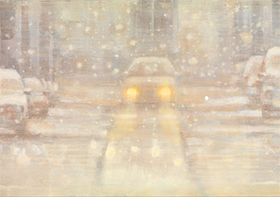 Visibility 1, 2011 Visibility 1, 2011
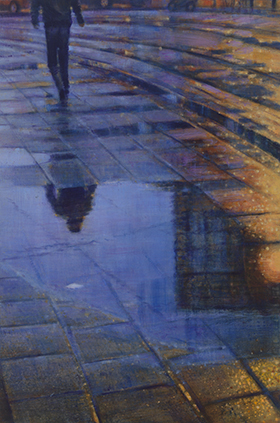 The Turn, 2013 |
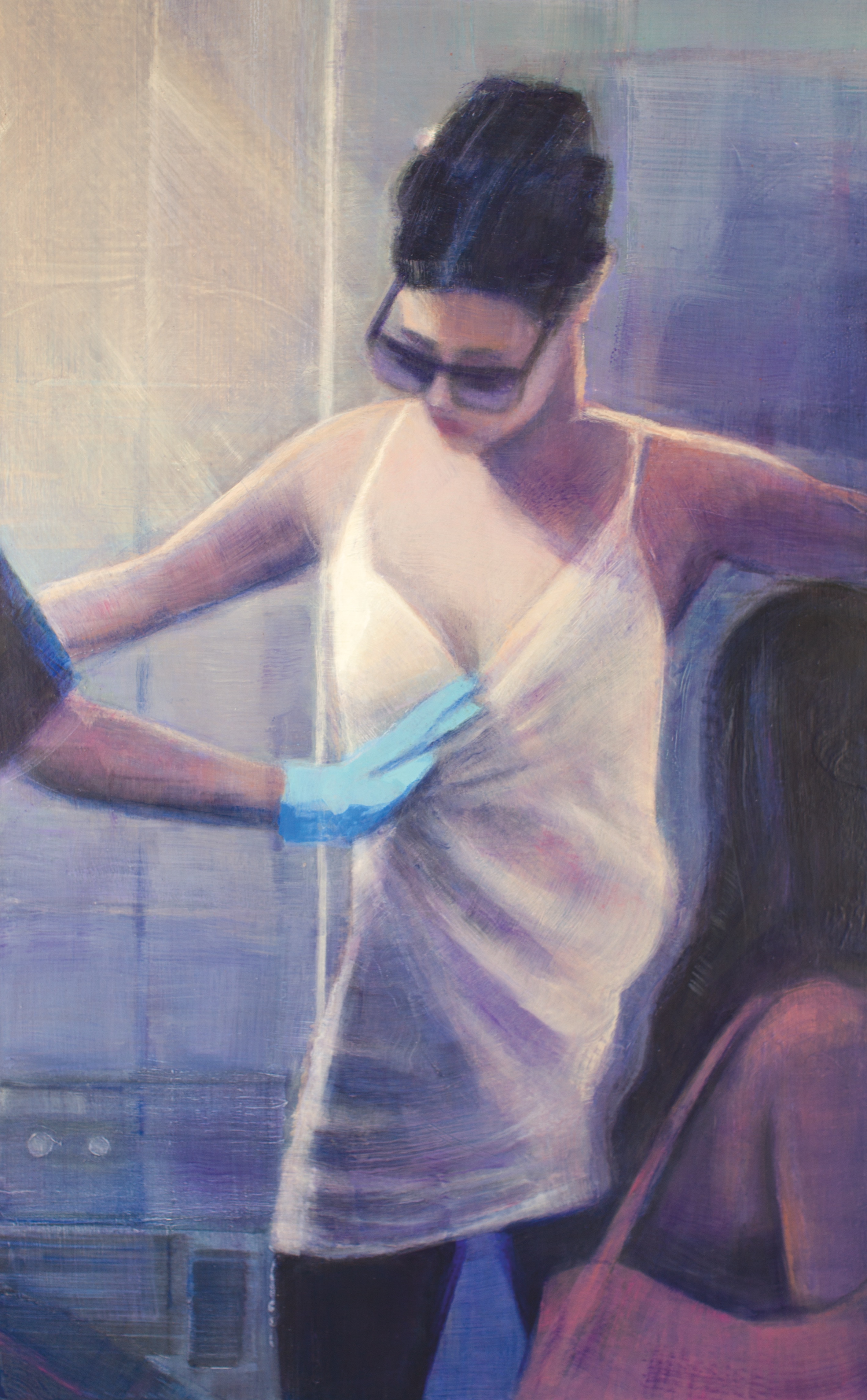
press-english-reality.pdf pers-nederlands-realiteit.pdf Dr. Hugo Heyrman/ another reality — an extensive exhibition, from 4 November - 20 January 2013 Gallery De Zwarte Panter, Antwerp Vernissage, saturday november 3th at 4:00-10:00 pm. Open from thursday till sunday from 1:30 – 6:00 pm. Closed on 27-28-29-30th december 2012 Hoogstraat 70-72-74 tel: 0032 (0)3 233 13 45 In the sixties, Heyrman revealed himself as the tender but inveterate anarchist, when he introduced happenings, video and conceptual art. With this rebellious attitude he started to paint (see the monography: Dr. Hugo Heyrman, author: Joannes Késenne, publisher: Snoeck). In 1967, he participated in a group show at the Wide White Space, where also work by Gerhard Richter could be seen. It affirmed his choice to become a painter. For his 'City & Street Life' series: to perceive the perception, he was elected laureate of the Jeune Peinture Belge (1975), paving the way for a more conceptual painting practice. Thereafter, besides his crossover activities as filmmaker, Internet pioneer, synesthesia- and new media researcher, he remained primarily a painter and realized an oeuvre that continuously played a pioneering role. Potential images About his motivation Heyrman says: "My reflections on the world and society are motivated by the idea that a single moment of understanding can flood a whole life with meaning. Art creates another reality. Starting from existing images, I paint the ambiguities of the visible, potential images with ambivalent meanings, so that another pictorial and mental space is opening up: cinematic, enigmatic and open-ended". In Dr. Hugo's painterly world, there are no boundaries between abstraction and figuration, objective and subjective, memory and imagination. The painter allows the viewer to explore a potential space —an atmospheric dimension of depth, tonality and color gradations. This transparent thinking leads to a liberating insight in the psychology of the image. Relevant for Heyrman's 'perspectivism', is the discovery of the unknown in the known. Mental filters 'Another Reality' presents images of a changing world. In 'The Crowning' (2011) we see how a young woman puts on a safety helmet. It is a powerful metaphor for the contemporary fragility of life. With a remarkable impact, it accentuates the continuous presence of the past, contained within all of us. For Heyrman, painting is a source of visual pleasure, but also a reflection on the visual and mental filters through which we experience the beauty and complexity of all images that surround us. The visual content of the informally painted images goes beyond words. It's all about what's happening when you look at a painting. Forms and colors act on us pre-reflectively; they affect the viewer before they become aware of what the brushstroke actually represents. Characteristic for his body of work is that it stirs emotions and the intellect equally. He shows us that essentially everything is a matter of degree. Dr. Hugo Heyrman's paintings function as potential images, which resonate in our minds. |
|||
|
Dr. Hugo Heyrman / Art Brussels 2012 Represented by Gallery De Zwarte Panter |
|||
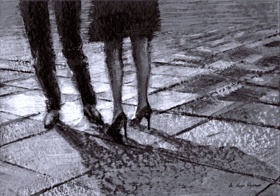 Inside the image, 2010 Inside the image, 2010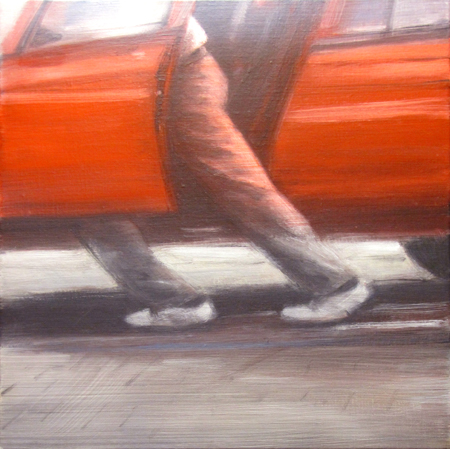 Body Power, 2009 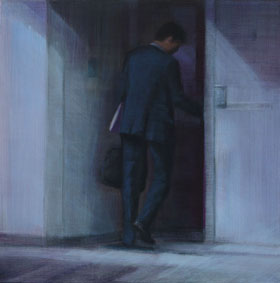 The Entering, 2010 |
press-english-inside.pdf pers-nederlands-inside.pdf Dr. Hugo Heyrman / inside the image 14 November 2010 - 9 January 2011 Gallery De Zwarte Panter, Antwerp Vernissage, saturday november 13th at 4:00-10:00 pm. Open from thursday till sunday from 1:30 – 6:00 pm. Closed on 30-31/12 and 1-2/1/2011 Hoogstraat 70-72-74 tel: 0032 (0)3 233 13 45 The exhibition 'Inside the image' comprises more than forty paintings, including fifteen works on paper. "What fascinates me are the nuances, intonations and modulations between the unique (subjective) and general (objective), the tension between the inner and outer world. I paint the interaction between things." The intensification of the gaze With his work Dr. Hugo Heyrman explores the physical, visual and conceptual boundaries of an image. Since the 1960s he has emerged as one of the most important painters of his generation. His artistic achievements are based on a series of paintings, including 'To Perceive the Perception' (1975), 'A Vision is finer than a View' (1986), 'Cinematic' (2003) and 'City Life & Body Language' (2008). A central concept in his work is the appearance and disappearance of images; the temporality of atmosphere, perspective, reflections, shadows and traces. Another returning theme is the fragility of modern life, whereby the body language of human emotions are situated against a background of changing urban existence. Images of images Some paintings are fragments from other paintings, for example 'Visibility #1' and 'Visibility #2', both are details from the larger work 'Snow Gaze' (2010). Heyrman says, "The act of painting leads me to other dimensions within the image, it opens up new imaginative meanings." In the exhibition we can experience these intentions, translated into matter, form, colour, light and transparency. The artist takes you along on a psychogeographical journey, making you aware of the fact that in the experience of a small world you can discover the whole world. |
|||
|
Dr. Hugo Heyrman / Art Brussels 2010 Recent works on paper by Dr. Hugo Heyrman, Represented by Galerie De Zwarte Panter |
|||
| Dr.
Hugo Heyrman / Monography Author: Joannes Késenne - Publishers: Snoeck [BE] - De Zwarte Panter Bilingual edition: Dutch and English - ISBN: 978-90-5349-685-5 Synopsis The artist Dr. Hugo Heyrman occupies a unique position within the art world. Looking back at an artistic career of more than forty years, we are confronted with an oeuvre that has long played a pioneering role – beginning in the nineteen-sixties, when he introduced Belgium to performances, actions, and conceptual art together with Panamarenko. These artistic projects, trendsetting for their time, were often framed in terms of ecological critique – such as the proposal for an auto-free inner city. At the beginning of the seventies, he set the tone with video art. Some will associate his name with the first digital experiments in the art world, and may not even realize that even from within all these diverse media, he still considered himself a painter. Conversely, even in his very earliest painted work, we already recognize that filmic zoom-function which enabled an entire generation of Flemish painters to break new ground in the nineties. Because he enjoys international renown in both the academic world – with his insightful analysis of synesthesia – and the booming alternative world of young digital artists on the web, no one seems to suspect that his ever-present painter’s intuition is still behind it all. Starting from a transparent mode of artistic thought, he consistently plays on the possibilities of various media to give form to that which is the essence of representation: the abstraction of every representation. This publication offers insight into the development of an artistic vision. The work of Dr. Hugo Heyrman makes a statement about the poetics of painting, about observational thinking, and about questioning the truth of images. |
||||
| Dr.
Hugo Heyrman / City Life & Body Language 2 16 November 2008 - 1 February 2009 Galerie De Zwarte Panter, Antwerp Introduction and book presentation by Joannes Késenne professor PHL. at 6:pm. The works from the cycle 'City Life & Body Language' are making the tension between experience and imagination visible. Dr. Hugo transforms visual experiences of atmosphere, light and dark, colour and time, into statements about painting. The 'painted image' reinvents the world. The paintings are about the discovery of the unknown in the known, investigating how meaning is created. One central theme with Heyrman is his existential engagement with the fragility of contemporary life: the city and street as a form of society. |
||||
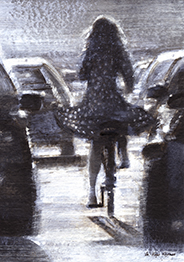 Surrounded 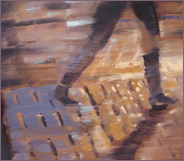 Walking 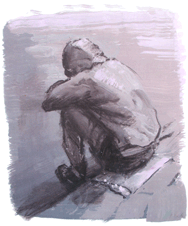 Enigma |
English.pdf Nederlands.pdf Français.pdf Dr. Hugo Heyrman / City Life & Body Language 1 8 September - 15 October 2006 Galerie De Zwarte Panter, Antwerp "I consider my paintings as meta-images (images about images). They are reflections on the influence of images. I create the physical reality (the skin) of a painting, by giving 'paint' an independent dimension. I feel as much image-maker as painter." The paintings in the exhibition are a visualization of two concepts: city life & body language. In the works, I developed a transformative vision, a questioning of the status of perception, memory and images. They show the ambiguous link between the painted image and reality —reality is a moving target. A city is especially defined by its diversity and street culture; how people differ from each other, how people are using silent language and personal space. How motion precedes emotion. Up to 90% of all of our communication is nonverbal. The body does not lie. The subliminal messages of the body are playing a major role in how we relate to others and how they see us. Our bodies are the most public signals of our identities, and private reminders of who we are. We imagine by remembering, or vice versa. In the ritual quality of interpersonal actions there is a hidden code of behavioural patterns, through which hierarchical and social power structures emerge. The paintings are ways of seeing, forms of visual thinking, they make the virtual and mental space of an image real. The power of painting is based on the fact that it is a nonverbal, manual, immediate, silent and static form of art. |
|||
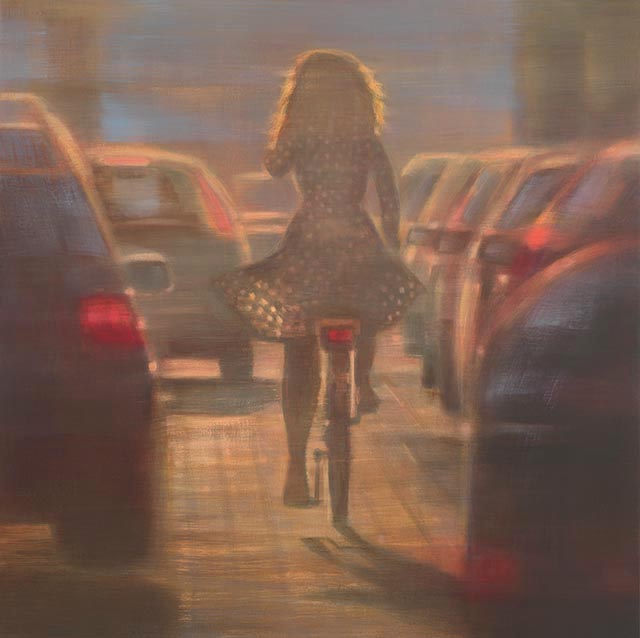 Surrounded Surrounded |
The
Painting Cycles |
|||
 What is Fear? |
Chronology
The painting series: a chronology La série peinture: une chronologie |
|||
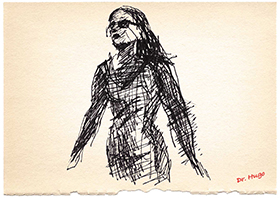 Sunlight |
||||
 |
||||
| |
||||